Share This Article
From shaping iconic brands to unveiling the hidden drama of Hollywood, Richard Kirshenbaum has long operated at the rarefied intersection of creativity, strategy, and cultural influence. Whether championing the next generation of artists through the Princess Grace Foundation or bringing the intrigue of classic Hollywood to life in his novel The Hollywood Fix, he has built a career defined by vision, discretion, and unmistakable taste. His trajectory is less a profession than a signature—a lasting imprint on the architecture of modern storytelling and image-making. In this conversation, we step into the world of a true arbiter of style and substance, exploring the insights and instincts that have shaped his singular journey.
Before diving into his personal reflections, Richard first examined the intricate machinery behind celebrity itself—the unseen work of managing fame and public perception. At the heart of our discussion, it became a striking reminder of what truly defines a Hollywood icon and the quiet orchestration behind the illusion. He stated:
“Stars still need handling, and very often the most successful of them have great publicists behind the scenes who handle and manage their public image. There are those who think they can do it themselves and then sometimes, unfortunately, make every mistake in the book. One must remember, it is often important not only what you do but what … you don’t do. And the American public can build up a star and also tear them down. Take the Royal family, for example. The press has been quite messy, and there are those within their ranks that think they can go it alone. Clearly, they cannot. One must remember, behind every great star is a great publicist and team … and they are PR stars as well. My dear friend Susan Magrino, Martha Stewart’s longtime publicist, has done an incredible job. Martha is, of course, unbelievable … but so is Susan. Martha and Susan, as a team, have created both longevity and icon status for her. Martha’s breakthrough cover of Sports Illustrated Swimsuit Issue in 2023 just didn’t happen on its own. It needed great PR thinking and execution to pull it off. Bravo!”
His observations underscore not just the mechanics of publicity, but the deep cultural fascination that surrounds stardom, which leads naturally to Hollywood’s broader allure.
Reflecting further on the public fascination with celebrity, Kirshenbaum offered a compelling perspective on why Hollywood’s allure has always felt larger than life:

“America, unlike Europe, does not have royalty, and Hollywood stars—and especially in the early days of Hollywood—gave the public our version of royalty; someone to admire, aspire to, and believe in. In its day, the Hollywood star system was both conservative, bullying, and also very paternalistic. The studios wanted the public to believe in their idea of perfection, and the stars needed to live up to that. Of course, this was impossible, and whitewashing scandals between the two World Wars was prevalent. It worked, though, as the public were more naive then and would accept and believe what the studios and press told them. This, of course, was a smokescreen, as the stars were all imperfect. The great star Tallulah Bankhead once quipped, ‘I am as pure as the driven slush.’”
It’s this fascination with the hidden stories behind the spotlight that inspired Richard to explore fiction, allowing him to dramatize the tension and intrigue of Hollywood’s Golden Age.
Turning from image-making to storytelling, he expanded on his latest work, the novel The Hollywood Fix, and what inspired him to set the story during the Hollywood Golden Age:
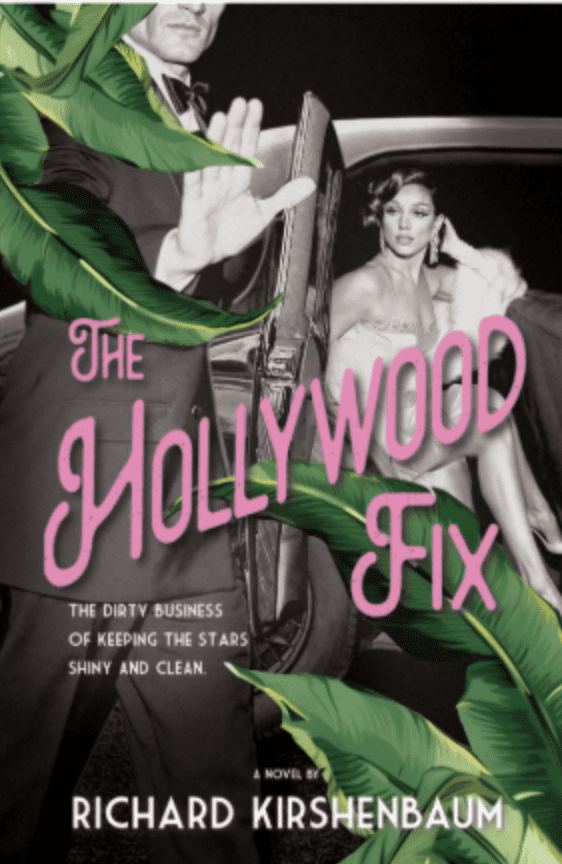
“Any great novel needs tension, and given the conservative mores of the 1930s and 1940s, the star system existed at a time when scandals were more scandalous and the drama was heightened for everyone involved.”
He went on to reveal that the story draws from real historical events, blending fact and fiction to create authenticity.
“The scandals in the book or fixes were all based on real Hollywood Fixes from that era. As an example, what would happen if you were a single female star who got pregnant and wanted to keep the baby? In the book, when my character, the movie star Mirielle Montaigne, secretly has the baby in order to keep it, she puts the baby in an orphanage and then adopts the baby and raises it as her adopted child. This, in fact, was based on a real story and fix that happened when Loretta Young had Clark Gable’s baby out of wedlock, which was taboo at the time. The daughter, Judy Lewis, didn’t know Gable was her father until she was much older and also noticed her large ears.”
Expanding on the broader context of that era, he continued:
“The level of control studios exerted over their stars was amazing but also quite terrifying. They had morals contracts and controlled the stars’ images, creating lavender marriages, insisting on abortions, and even changing names, nationalities, races, and looks. I thought this offered an incredible backdrop to write a novel and create that level of tension on which great fiction exists. I am so pleased with the result; my novel The Hollywood Fix is out on Amazon to wonderful, gratifying reviews.”
Before Hollywood became the canvas for his storytelling, Richard honed his understanding of culture and consumer behavior through branding, which would later inform his work with stars and storytelling.
Reflecting on his early career days at Target, Kirshenbaum recalled:
“At Swatby Kirshenbaum we know that brands that truly succeed are brands that create a new category, culture, or an idea that hasn’t been done before. Quality, service, and execution can then add to creating brand longevity in bringing something to the table that did not exist. This all fulfills a need and desire for an increasingly discerning consumer. These next-level brands all possess an overall strategy and platform people understand, covet, and aspire to. My early work for Target was such a brand. It was the first to combine department store aspirations for a large discount retailer. Our breakthrough fashion/housewares campaign and popularizing the Target ‘Bullseye’ logo created a new way to provide the American public with a ‘high/low’ shopping alternative. I actually had trouble finding a well-regarded fashion photographer to shoot the campaign at the time and had to prevail on my friendship with the great Matthew Rolston. Target was the first to offer department store taste and style to a price-conscious consumer, and for that they get flowers and are still relevant.”
This talent for recognizing and cultivating creative potential extends beyond branding into his passion for nurturing the next generation of artists.
“I am very honored to have been elected to the Board of Trustees of the Princess Grace Foundation. The Foundation provides essential grants to artists in the entertainment space, and as a creative businessman, it is an organization that is near and dear to my heart. The arts are often underfunded and underappreciated, and the recipients are the next great stars. This year at our Gala, we honored Jon M. Chu, who directed Wicked, and who had been a grant recipient when he was starting out. He credits the Foundation for being there at a critical stage in his career development. The Foundation, under the auspices of H.S.H. Prince Albert of Monaco, is committed to furthering his mother, the late Princess Grace’s legacy, of giving back to the arts and artists. It has been very fulfilling personally to help nurture the next generation of young performing artists and creative people who are so deserving, as they are the stars of tomorrow.”
Just as he champions others, Richard reflected on the mentors who shaped his own creative sensibilities—particularly the women whose wit, courage, and insight left lasting impressions.
And perhaps it is in those quieter, behind-the-scenes moments where Kirshenbaum’s sensibility is most clearly defined. Reflecting on the early influences that shaped his voice, he points to an unexpected but formidable force: comedy legend Joan Rivers.
“She paid $8 a joke,” he recalled, noting how even the smallest assignments carried lasting weight. More importantly, she imparted a lesson that would stay with him throughout his career: ‘Richard, now this joke is very funny but it has two punchlines. You need to only have one punchline at the end and let it… breathe.’”
In that simple directive lay a philosophy of precision, restraint, and timing—a principle that continues to guide Kirshenbaum’s work in branding, storytelling, and shaping cultural narratives. In a world driven by noise, true mastery is knowing not only what to say but, just as importantly, what to leave unsaid.
An accomplished author, playwright, and the CEO and founder of NSG/SWAT, Kirshenbaum generously shared his expertise with Social Lifestyle Magazine, and we are grateful for his insights.